
Last weekend I was at a place called Attappadi in Kerala to shoot a documentary film on the Muduga Tribe for a very close friend, Rayson. If you had seen my short film, Two Ways Together, I’m sure I don’t need to introduce him to you. Added to that, he is a good friend from my college days, a very determined person who is doing his PhD on the music of the Muduga lot for past 5 years- also a good writer, singer and musician. Acting was a new talent I forced on him without any mercy and the result is of course all those nice remarks I received from many of you guys.
It was an awesome experience in my life at one of the paradises on earth with the most affectionate people around. Thanks to my new friends from Attappadi, Santosh and Manoj for identifying me as one of their family members. Can’t ever forget the nice home food and fun I shared with them. Without their support the shoot wouldn’t have ever happened.
Rayson already had some excellent video footage and interviews that include s a Muduga funeral function and couple of other events, taken a year back. So we already had a rough frame of the film and a fresh checklist for all that is to be shot from the spot. It took us a tiresome 13 hours from the heat of Chennai to reach the heart of Attappadi. Something which I wanted to shoot yet missed in this whole trip was the painful way which birds were downloaded and transported from the top of a bus at Coimbatore Bus Depot. They even had two closed sacks full of live little ones.
As soon as reaching Attappadi, we charged our energies as well as the batteries at Santhosh’s place. By this time he and Manoj were ready with their bikes and we started our first day’s journey to the forest land. An interesting thing our beloved friend did was to offer a big ‘Hi’ to the forest guard who stopped us on the way. In the confusion of identifying his unexpected friend, we were politely permitted to travel into the restricted area. I could take some beautiful visuals of the forest and the river with huge and humongous population of tadpoles. Santhosh, Manoj and Rayson did their best to get some leaches to perform a nice bloodsucking demo for my cam, but they seemed to be so shy. And for our surprise, back at home I discovered a bright blood stain on my Jeans, right above my left leg stocking. That night was good fun sharing chicken as well as cheap jokes of all kind.
On Sunday morning we quickly got ready to try our luck on the most wanted visuals with a Muduga tribal named Ayyappan. With the help of him we took all the interesting shots that showed how th ey lived a life close to nature. They took honey, but never killed a bee…they found food on the roots of a creeper, but planted a new bud before leaving the place…they collected tender bamboo buds for food but always left a few to grow for future. Ayyappan Maman, in spite of his old age and a curved hunch-back climbed the cliffs like a young enthusiastic monkey. I had to struggle with the cam to reach his speed and style. And Rayson had a real bad time with his fat belly when he had to scroll into a cave on top the cliff where we interviewed Maman on the music of Muduga hunt.
After the shoot we met one of Rayson’s Guru-like figure Mani Achan who is leading a very peaceful life in his farm house at the hillside preaching and practicing a new social life and philosophy. I identified him as a priest who left that PROFESSION to become the real preacher of being in nature’s way of a natural life. At the time of leaving he invited me to spend a vacation at his Eden Garden. I told this in mind, wait I'll be back as soon as I find my Eve.
Now back at the room in front of my comp, while editing the film, I’m regaining the thrill of those moments I shot as well as all those happy hidden moments that I preferred not to shoot.
Friday, July 18, 2008


Wednesday, May 28, 2008


Finally, when the director explains to the auditioners that he or she has just played his or her part in the film, each is amazed, uncomprehending. They have very different conceptions of what a film and film-acting should be like. But Makhmalbaf explains at one point, "If cinema reflects social life, then it is for everyone."
Now that’s a quick review of “Salaam Cinema”. But topic of discussion was the objective of filmmaking. Soma was so adamant that every film should convey the message to each and every viewer ( A, B and C class audience as called in India). I was defending her statement. In my view every filmmaker need not think that he should reach everyone. On the objective of filmmaking let’s classify filmmakers as Crappy filmmakers (Agenda: No clue why they are making film), Safe-side filmmakers (Agenda: Successful films for their survival with all safety measures for the success of film), Beautiful filmmakers (Agenda: A beautiful film imitating another beautiful film done in past or in another industry), Experimental filmmakers (Agenda: Break all rules and creates new dimensions for filmmaking inspiring other filmmakers)
Federico Fellini’s '8 ½', Mohsen Makhmalbaf’s ‘Salaam Cinema’, Alexander Sokurov’s ‘Russian Arc’, T. V Chandran’s ‘Danny’ etc, follows this pattern of experimental cinema. They are above all the other categories of filmmaking. In fact when others can be called filmmker, they are the innovators or scientists in cinema.

I’m not against the objectives or other filmmakers. I equally enjoy a crappy film and an experimental film. My simple answer to Soma is that all filmmakers need not think that they have to reach every single viewer. When the other categories of filmmakers target general public, experimental filmmaker reaches or inspires another filmmaker. Now that is his objective. Films need not be for everyone, they can be targeted at a sector of audience too…It is great if a filmmaker becomes the subject of study for another filmmaker.
Sometimes I feel that learning filmmaking is killing the innocence in me to enjoy a crappy film. But at the same time I’m proud that the knowledge of filmmaking is giving some kind of social responsibility. Filmmaking is a mission as well as a passion above profession.
Tuesday, May 20, 2008

Gour is one among the eight kids who communicated to audience through their photographs on the life of ‘NO' hope lived by those who dwell in red light area of Kolkata, in Zana Briski’s Oscar winning documentary film “Born into Brothels.” The other kids are – Avijit (11), Kochi (10), Manik (10), Puja (11), Shanti (11), Suchitra (14) and Tapasi (11) too.
A few weeks back I got a chance to see this documentary that left me deep in thought for hours. Whenever I am fascinated by something, the first thing I does is to google for more details on it. Undoubtedly the search on it led to so many facts on this film, the crew and its cast. Added to that, the controversial remarks as well as the critical rewards. Let me not try looking into the authenticity of it…Let me just be frank on what I loved about this film.
There are a few advantages documentary films have over any fiction. That is nothing but the flexibility on pre-production, production and post-production. Moreover, an uncertain nature of the past, present and future of the film as well as the hardwork and adventure involved in each stage of its fulfillment. A natural documentary filmmaker should have only one objective- to bring the truth in the most appealing form. Documentaries are hence appreciated for the innocence, influence, trustworthiness and reach of its content and not for the beauty or the form of film.
In both the ways “Born into Brothels” is a remarkable film. The content as well as form of this film touch the heart of any genuine viewer. Hats off to the very special thought of filmmaker for ‘living the film’ rather than just ‘doing the film’.
Briski, a documentary photographer, went to Kolkata (Calcutta) to photograph prostitutes. While there, she befriended their children and offered to teach the
 children photography to reciprocate being allowed to photograph their mothers. The children were given cameras so they could learn photography and possibly improve their lives. It is nothing but the photographs taken by the kids that tells you their story. The narration is by the kids themselves as well as the filmmaker. The children's work was exhibited, and one boy (Avijit) was even sent to a photography conference in Amsterdam. Briski also recorded her efforts to place the children in boarding schools.
Born into Brothels, by Ross Kauffman and Zana Briski, is the winner of the 77th annual Academy Award for Best Documentary Feature. It is a tribute to the resiliency of childhood and the restorative power of art.
What we must be appreciating is the true interest filmmaker took to showcase facts though the eyes of children in the most innocent and touching manner as well as the excellent effort they took to save the children from their terrible reality. As a filmmaker I was fascinated by the style of naration, innocence of concept, smooth editing and creative placement of visuals. The music goes well with the mood. Three cheers for the filmmaker's efforts on this cause.
Visit the site: http://www.kids-with-cameras.org for more.
Sunday, May 11, 2008
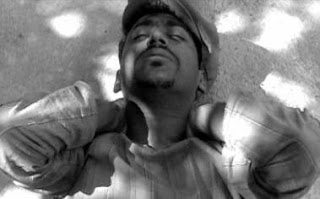
I thank my friend Vijaynarain for doing the magic of music with three different themes - The enlightment theme, The excitement theme and the rotation (The journey of art) theme, which coloured this black and white film in the mind of viewer.
Tuesday, April 15, 2008


A few weeks back while having a quick coffee in office canteen I and friend Shanmugavel had an interesting debate.
Shan asked me what I would do if some social injustice is happening on someone and if I’m the only one there to help him….Will I save him or will I let it happen so that I can photograph it and communicate it to others to show that such incidents occur in front of our eyes. His question was whether I would be a professional communicator or a humanitarian at that moment.
Taking a closer look, this is one question that lurks around a media professional when ever he or she has to face such an incident. Unlike others he needs to perform two tasks. He has to be a responsible communicator as well as a social worker.
Now getting back to Carter’s life,
In 1993, on a trip to Sudan’s worst Famine affected areas, Carter found a girl crawling towards a food camp, located a kilometer away. When the girl stopped for a while to rest, a vulture landed nearby. Later he said that he waited about 20 minutes, hoping that the vulture would spread its wings, so that he get a catchy-stunning visual. But it didn't. However, Carter snapped the haunting photograph and chased the vulture away.
The New York Times brought this pic, where it appeared for the first time on March 26, 1993 and hundreds of people contacted the newspaper to ask whether the child had survived. In fact they had to run a special editor's note saying the girl had enough strength to walk away from the vulture, but that her ultimate fate was unknown.
Kevin Carter was awarded the Pulitzer Prize for Feature Photography on May 23, 1994 at Columbia University's Low Memorial Library.
This made many communication guys wonder whether there is any difference between the photographer and the vulture on than space.
“The man adjusting his lens to take just the right frame of her suffering might just as well be a predator, another vulture on the scene.”
Both the species, the vulture and the communicator, cared only of their hunger.
 "I was appalled at what they were doing. I was appalled at what I was doing. But then people started talking about those pictures... then I felt that maybe my actions hadn't been at all bad. Being a witness to something this horrible wasn't necessarily such a bad thing to do."
 Friday, March 28, 2008
The Artist
- Every child is an artist. The problem is how to remain an artist once he grows up:
Friday, March 21, 2008
I was tagged by friend Neetu to answer these and share……
Frankly, at first glance this exercise found apt for my facebook or orkut account, but not for a blog. But doing it gave me a chance to revisit I, me & myself.
I invite you to try this...
8 things I'm passionate about:
1. Talking a lot - to young enthu lot.
2. Heights – Sky, Mountains etc
3. Greens & Grays – My colors.
4. Smell of camphor – An addiction.
5. Camera & Film – Capturing moods & moments.
6. Family – My sweet little world.
7. Animation – I’m a kid there.
8. Travel, Culture & Music – Exploring both history and geography.
8 things I want to do before I die- (no order)
> Make love to the most enthusiastic and passionate woman.
> View world from the highest possible altitude.
> Take class in a film institute.
> Do an animation film & a wild life documentary.
> Explore every inch of universe.
> Own a tree house amidst a forest & lake and live a Tarzan life.
> Get a book published.
> Make a film like 'Life is Beautiful', acting the role played by Roberto Benigni.
8 things I say often:
> OkaY
> Listen
> F**k
> As I told U
> Try
> Oops
> My goodness.
> Hey, Come on
8 books I've read recently
(FYI : “Recently” means ‘my entire life’ here)
> Crime and Punishment - This book gave me sleepless nights.
> Oru Sangeerthanam Poole (Malayalam) – The most romantic work read till date.
> Animal Farm – Undoubtedly a study material for Social Scientists.
> Short stories by Basheer, Ruskin Bond & O Henry
> Alchemist (Paulo Coelho) – Follow ur dreams.
> Veronica decided to die (Paulo Coelho) – Knowing the value of life.
> The Zaher (Paulo Coelho) - Yet another work searching the meaning of life.
> Sherlock Holms – An all time admirer of Holms for his simplicity and intellect.
8 songs I could listen to, over & over:
Tuff task, I must tell about Musicians... Mostly Instrumental collection – Folk, Blues, Sufi, Carnatic, Hindustani, Remix etc
Songs
> Arial Boundaries – Michael Hedges
> Dessert Roses & Brand New Day - Sting
> Celestial Soda – Ray Lynch
> Enthoru & Aaroo – Vidyasagar
> Ferry Me Across Water – Kim Robertson
> Sister Drum – Dadawa
> Gurus of Peace - A R Rahman & Fateh Ali Khan
> El Vuelo
Musicians
> Sandeep Chowta
> Lucky Ali
> Kenny G
> Yanni
> Kitaro
> Vanessa Mai
> A R Rahman
> Sakir Hussain & Prem Joshua
8 things that attract me to my friends:
> Simplicity
> Openness & Optimism
> Enthusiasm & Energy
> Craze & Adventure
> Way of communication
> Dressing sense & neatness
> Smile
> Humor sense.
8 people I think should do this tag
Open to all.......Feel free to try this
Thursday, March 20, 2008
Arun Bose S
Ph: 0044 7865929837, Email: arunboses@gmail.com
Documentary films
Not a Drop of Rain – About 100 years of drought and lore in Kalahandi, Orissa. Produced by NFSC, Funded by Ford Foundation. Screened at NFSC.
Oh Tiraupati Listen – About the Mahabharatham festival of villages in and around Kanchipuram. Produced by NFSC for Kanchipuram Research Project by OSLO University, Norway. The film was well received at OSLO for a Workshop on Festivals.
Panguni Uttiram – About the Panguni Utiram festival celebrated at Ekambaranathar Temple, Kanchipuram. Produced by NFSC for Kanchipuram Research Project by OSLO University, Norway.
The Story of Mudugar – About the life of tribal group Mudugar
Moves, Blind Moves - About the life of a blind chess player, Dayalan,
Forever Heber - About the Culture and tradition of Bishop Heber Hall, MCC.
Man and Nature – Documentary film on Mannan Tribe, Kerala.
Short Concept films (Duration: less than 5 min)
My Paper Boat – Story of a little boy’s lose because of drought
The Artist – An artist’s stages of enlightenment and excitement.
Black/White/Brown – Celebration of equal opportunities.
The Butcher – A sad moment in butcher’s life.
Two ways together – A journey of two ends of life.
Is & Was – A definition for Man
Ups & Downs- A rat’s attempt to scale heights and falls.
Yours Truly – About a teacher and student.
Anthakshari – Celebration of diversity.
Mission Escape- A computer mouse trying to escape
Words – On the power of language.
Here we go – About inclusive society. Screened at Ability Foundation Fest.
V343 – A collection 3 funny short films
Chords of Life– A "Passion" statement.
Blue is Sky– A poetry on passion and love.
Face or Fall – A film on fear.
NextStop – A one min film on cruelty to animals
Short Films (less than 30 mins)
In Search of Peace – The story of an young man in search of peace.
My Mirror – A man’s life through his mirror’s point of view. Screened a fest by Multi-visual Academy
Ad/ Corporate Films
Men in Borland- Corporate Ad Film for Borland Technologies PVT LTD.
Corporate videos for Hexaware Technologies PVT. LTD.
Thursday, March 06, 2008
 The idea of Communication is defined in manifold ways by many people at various point of time. Rather than the thought as a simple socio-cultural parameter this term had gained a scientific value with its mammoth need and utility to mankind. In fact there is no doubt in identifying it as the backbone of the structuring and growth of any society whether it is of human or of any other living being in the universe. The ways of communication alone varied from species to species - from time to time. Sound, action, text, visual etc…has been effectively used for years to perform this simple as well as complex task. A colony of ants to the new-media (Internet-telecommunication) social network by post-modern man utilizes the principles of communication for their day-to-day life.
Now it is the time for identifying communication scholars and scientists for new innovations in the structure of communication. Only a new innovation leads to a better innovation and hence living a natural life of survival alone cannot fulfill the need of time. It is quite interesting to see people running for their daily bread and gaining it. If the same person takes the same route and the same mode for the same quantity of bread for another ten days, it is ridiculous. Communication is also such an area where one shouldn't repeat the same mode and way for days and months.
Moreover communication has the power of creating unexpected ripples in the mindset of people and hence all that is communicated should be a right thought in a right way. We have advocates and doctors taking an oath identifying their profession as a responsi ble mission. At the same time a journalist, photographer or filmmaker is someone who comes to common man every other day propagating a thought or news. But while the service of a doc or Advocate becomes the choice of common man, the media person comes to him by default through his TV set or News Paper. This must be worst if the mode of communication is a repeated Ad film. It is like accepting anything and everything told by a priest because you tend to have a natural trust in him. Now don’t you think the oath of social responsibility is equally meaningful for a communication graduate?
Bagging a communication graduate tag and walk around sowing and reaping complication and confusion among people is not the aim of a journalist, PR- Ad executive, photographer or a filmmaker. He is not meant to work only for his daily bread. When I see myself or any of my communication friend’s money is an easy thing to gain. But identifying the profession of communication as a social responsibility is something different. You can see better actors among us who speak and think exactly opposite. The clash is mainly of egos and ethos. Hardly anyone feel themselves as a common man inside however he acts unnaturally outside as a man of real blood.
The society needs real good thinkers and innovators for good communication. The day when you throw away the timely pleasure of living for yourself thereby reading and reaching the pulse of common man you becomes a good communicator. You are made to propagate humanity and culture. Three Cheers for good Communication.
Wednesday, February 27, 2008

 n of 2 dimensional and 3 dimensional spaces. But what is a real 3 dimensional film considering filmmaking as an art form and a medium of communication? A film in which the director identifies his audience intelligent enough to imagine all that he has not visualized in his film can be considered as a 3 D film. Here the audience becomes a part of his film. They go back home with n number of questions in mind imagining their own solutions. The difference is that director is not feeding his intellectual partners with a solution. His film is more or less like an abstract art or an open book where he leaves the viewer with an opportunity to imagine a world beyond his film.
  municating with the audience. After a lot of emotional fight and fury between two lead characters the first film ends with the climax of their children playing together. With this the film already communicated the message. But for our disappoint director added a textual quote in the end saying “Thus they came close as the vision of future”, which faded the film to a 2D space leaving us nothing more to imagine or dream.
  The film is about two children- Ali and his sister Zahra. In the starting we see Ali losing Zahra’s shoes by mistake and the siblings decide to keep the predicament a secret from their parents knowing that there is no money to buy a replacement pair. In the climax Ali enters a footrace in hopes of receiving the third prize of a new pair of sneakers. He accidentally places first and wins another prize instead.